A romantic look back at the GB Davis Cup win in 2015
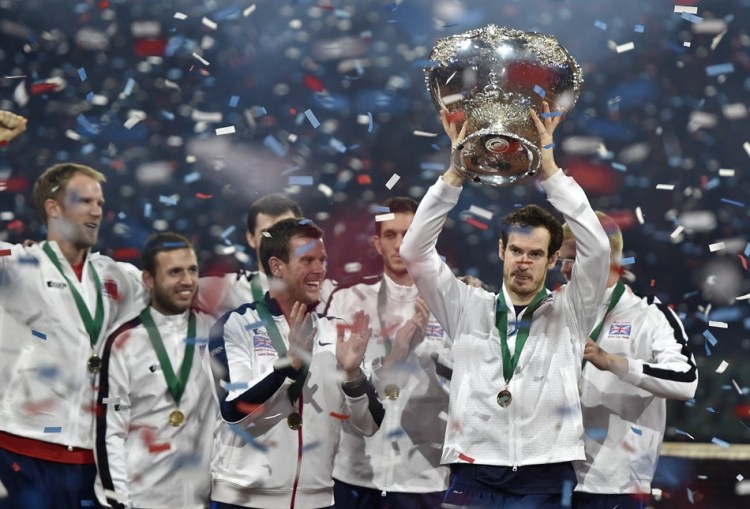
The rise of the Great Britain Davis Cup team was remarkable. Britain had a relegation playoff with Turkey in July 2010, with the loser getting relegated to the lowest tier of the competition. Thankfully GB won that tie. 1967 days later, Great Britain won the Davis Cup – the last time that happened Fred Perry was an active player and not a clothing brand.
Round one in 2015 was against the USA, the founding Davis Cup match, which was first played in 1900. In the opening rubber Andy Murray, as expected, beat Donald Young. The second rubber was slightly more remarkable. The best rubber of the whole tournament.
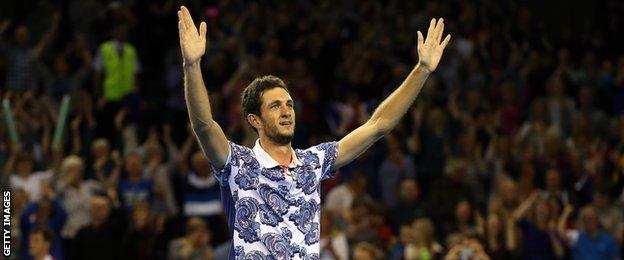
The wiry James Ward in his most garish, patterned GB top played against the giant 6”10 John Isner. Ward, then world number 111, was two sets to love down against the huge serve of Isner and had zero break point opportunities. Not only this, but he was yet to reach deuce on the Isner serve and had only managed to make it to 30 three times. But, with huge help from captain Leon Smith’s calming words throughout and the raucous Glasgow crowd, Ward turned it around.
Five hours of tennis. Ward won 15-13 in the fifth, an 111 minute final set, the Glasgow crowd witnessed an epic. It was an unbelievable turnaround after the first two sets. Looking back, this is sure to be Ward’s defining moment in his career. Thanks to this and two Andy Murray singles wins, Britain move to the quarter finals.
The quarter, semi and final were all about one family. All nine points came from this little known set of brothers from Dunblane. Andy and Jamie Murray teamed up for the crucial doubles rubber in all three ties. The importance of the doubles rubber cannot be underestimated; in 10 of the 15 ties in the World Group in 2015, the winner of the doubles rubber won the tie. This brotherly partnership may be a great story but the quality they have as a doubles pairing is truly outstanding. Jamie, the doubles specialist, reached the world number one ranking in 2016 and Andy really has the game to be right up there with his older brother. Andy’s movement, return game and hands at the net all add up to a world class doubles player. Combine all of this with the innate intensity and competitiveness they gained from mum Judy, and the on court chemistry from growing up together – you have a pretty formidable pairing.
Leon Smith and his team headed south to the Queen’s Club in London for the quarter final against France. Not a bad choice of venue at all; Andy was fresh from lifting the singles title at Queen’s a month before and has done fairly well overall in London grass court tournaments. The match was locked at one rubber a piece and one set a piece in the doubles. The tie break was at 5-6 in Britain’s favour with Andy returning. Andy was always going to return on the add side.
The add side is returning on the left, for the odd number of points. So, 30-40 for example or “advantage” for or against during a deuce. These are the game winning or losing points, the big points.
He loves big moments, the big points are what separates the top players from the great players. A trademark accurate return from Andy won the point and the set. Britain carried the momentum forward to easily win the fourth set 6-1, to win the rubber. Andy returned for his third match in three days in the fourth rubber, much to the delight of the London crowd, but probably less so for his body. It was a real battle with the world number 11 Giles Simon, who was far fresher than his opponent. Simon was up a set and a break early on but Murray grinded away, literally getting up off his knees after a 35 shot rally in the second set. Finally, following endless low slice backhands and relentless hitting, Murray won in four sets. Unassailable lead – onwards.
Much to the delight of the Stirling Uni Barmy Army, Britain returned to Glasgow for the semi-final against Australia. A sea of red, white and blue and continuous Andy/Jamie songs met the team. Again, the tie was one-all going into the doubles, where the Murray brothers played little and large Lleyton Hewitt and Sam Groth. Hewitt is one of the very few players to have the tenacity and speed to match the younger Murray. Groth is a brute of a player with the biggest serve in history, clocked at a mind bending 163mph. I think you can work out who is ‘little’ and who is ‘large’.
The match went all the way to five sets in a truly enthralling encounter. Seeing Hewitt give it a running fist pump in his backwards cap after Australia won the fourth set sent the crowd back in time to the early noughties. The fifth set was up and down, perfectly representing the match as a whole. After a break of serve each, it was 5-4 to Britain on the (huge) Groth serve. At 15-30, Andy produced a sensational inside out forehand return winner to take it to match point. The shot forced the BBC’s Andrew Castle into using the word “unreal” – a shot so good it made Castle 30 years younger. A missed Groth volley on the next point sent the Emirates Arena into delirium. Andy was a man on a mission as he beat perpetual bad boy Bernard Tomic on the Sunday to send GB into the final.
The final was the only tie not on home courts, it was away to Belgium in Ghent. Unsurprisingly, Belgium sorted clay courts for the final to try and nullify Andy. Spoiler – it didn’t work.
The home team having the luxury of controlling the surface and location of the tie is one of the unique tactics within the Davis Cup. GB went to Glasgow twice to enjoy the patriotic Scottish crowd supporting two of their favourite sons Jamie and Andy. Clay is well known as Andy’s least favourite surface so the final was always going to be on clay. Andy’s counter punching game can be slightly nullified with the slower surface.
Yet again, the tie was locked at one-all so the doubles would prove to be crucial. Andy and Jamie took to the court again and just like the quarter against France and semi against Australia, it went to one set all. Breaks of serve for both pairs followed, as did some blockbuster points with world class net play on show, led by Jamie Murray. The Murray’s held their nerve to win and edged Britain closer to history.
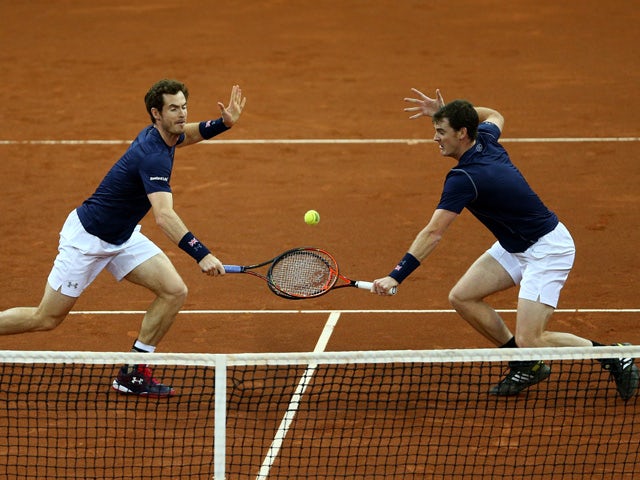
All the doubles matches in Britain’s campaign perfectly showcased the underappreciated form of tennis. Touch volleys, big smashes, tactical battles, serve vs return, passing shots, incredible reactions with all four players at the net. Mainstream media and social media should cover doubles more, especially as it is the most accessible version of the sport for amateurs. All sports are trying to find an exciting and accessible version of their game to stay relevant – think T20 cricket, rugby sevens and rugby X. So, I really think the tennis governing bodies should do more to get top level doubles on prime time TV and put highlight reels everywhere across social media.
Of course it was only right for Andy to bring it home for his country in the fourth rubber against Goffin. Playing on the slow surface simply allowed Murray’s scrambling game and supreme fitness to play vital roles in the outcome of the match. The second set was won on an incredible, lung busting 25 shot rally with Murray winning it on a running forehand winner. This point was only bettered by the match point in the following set, the Davis Cup winning point. The Cup was won with the most incredible lob after Murray had been, metaphorically, on the canvas earlier in the rally. It was a point he never should have won. A point a mere mortal never would have won. His monumental effort over the whole tournament was incredible: playing (and winning) three matches in three days across the final three rounds. He beat the world number 11, 21 and 16 – all in his third match in three days. Superhuman.
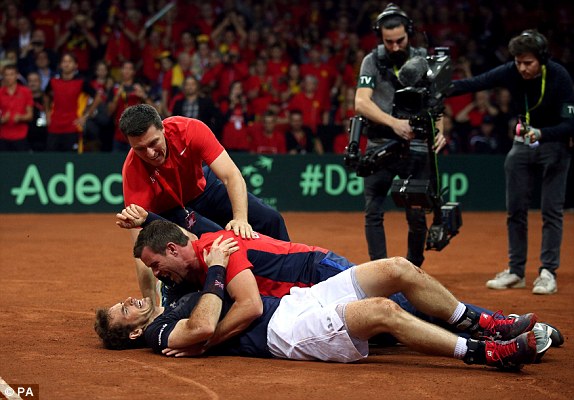
GB’s win is truly one of the great tennis stories led by an immense performance from one of the greatest players of all time. 2015 showed just how great this old tournament can be.
 twjb.sport